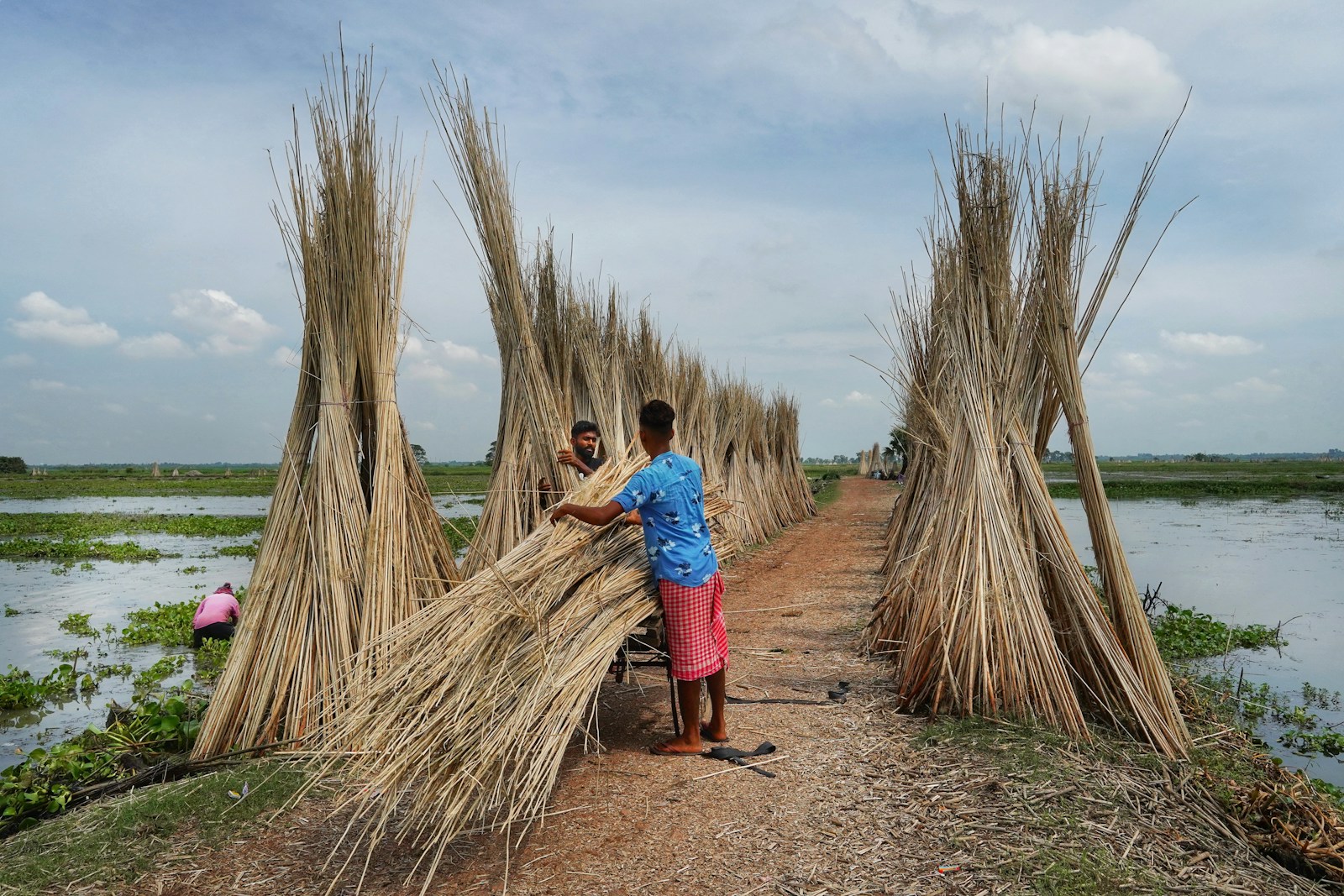
Jute is often called the “Golden Fibre” — and not just because of its color or economic value. It’s one of the most eco-friendly natural fibers in the world. Below are the key environmental benefits of jute, making it a powerful alternative to synthetic materials like plastic.
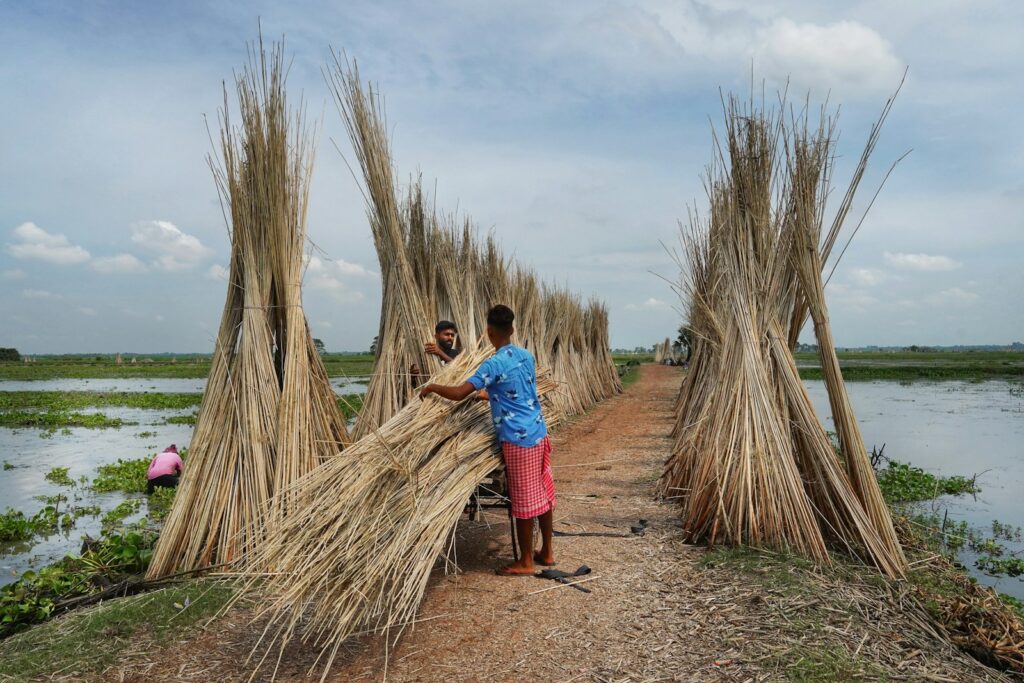
🌿 Environmental Benefits of Jute
1. 100% Biodegradable and Compostable
- Jute naturally breaks down in the environment in 1–2 years, unlike plastic, which can take hundreds of years.
- It turns into organic matter without leaving toxic residue, enriching the soil rather than polluting it.
2. Requires Very Little Water and Fertilizer
- Jute is a rain-fed crop and typically doesn’t need irrigation or synthetic fertilizers.
- It grows with natural rainfall and soil nutrients, making it low-impact compared to cotton or other commercial crops.
3. Low Carbon Footprint
- Jute cultivation emits very low levels of carbon dioxide and other greenhouse gases.
- Processing jute into bags, ropes, or fabric also consumes far less energy than plastic manufacturing.
4. Absorbs CO₂ and Releases Oxygen
- Jute plants absorb large amounts of carbon dioxide (CO₂) and release oxygen — more than most trees!
- In fact, 1 hectare of jute plants can absorb up to 15 tons of CO₂ and release 11 tons of oxygen in just a few months.
5. Improves Soil Health
- Jute’s deep roots prevent soil erosion and help improve the structure of the soil.
- After harvesting, the roots and leaves enrich the soil with nutrients for the next crop.
6. No Harmful Chemicals in Production
- Jute doesn’t require bleaching or harsh chemical treatments to be used in products.
- This means less water pollution and less exposure to toxins for workers and the environment.
7. Reduces Plastic Pollution
- Jute products (like bags, packaging, and mats) replace single-use plastic in many industries.
- Every jute bag used instead of plastic helps reduce marine litter, landfill waste, and microplastic pollution.
8. Reusable and Durable
- Unlike plastic bags, jute bags are strong and reusable many times before they wear out.
- This durability reduces the need for frequent replacements, cutting down overall waste.
9. Supports Sustainable Agriculture
- Jute grows quickly (within 4–6 months) and fits well into crop rotations with rice and other staple foods.
- This promotes sustainable land use and supports farmers in maintaining healthy farmland.
10. Eco-friendly Waste Disposal
- Old jute items can be burned without toxic fumes or composted into the soil.
- Even jute production waste can be used in paper manufacturing or as organic mulch.
♻️ Real-Life Applications Helping the Planet
| Jute Product | Environmental Impact |
|---|---|
| Jute bags | Replace single-use plastic bags in retail and grocery |
| Jute rugs/mats | Biodegradable home decor instead of synthetic options |
| Jute sacks | Used in agriculture instead of plastic or synthetic sacks |
| Jute geotextiles | Prevent soil erosion naturally on slopes and riverbanks |
| Jute ropes & twine | Natural alternative to plastic-based ropes |
🌏 Global Push for Natural Fibres
With rising awareness of climate change, plastic pollution, and sustainability, governments and companies around the world are investing more in natural fibers like jute. It’s not only good for the planet — it also supports rural livelihoods, especially in countries like India, Bangladesh, and Nepal.
No responses yet